|
Pre-Award and Research Development |
September 18, 2026 |
|
|
|
|
|
|
|
|
News and Updates |
|
|
Congratulations, NB&B Graduate Students!
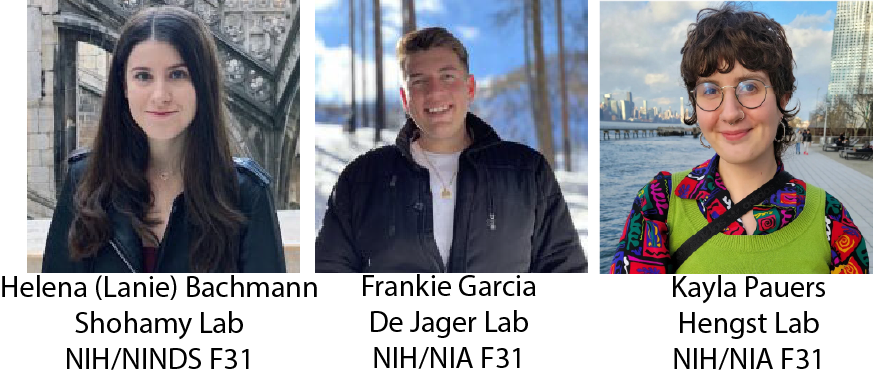
Lanie Bachmann, Frankie Garcia, and Kayla Pauers were each awarded NIH F31 NRSAs. See awards list below for more details. |
 |
|
|
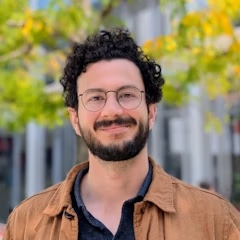
Congratulations, Dr. Monsalve Mercado!
Dr. Mauro Monsalve Mercado (Miller Lab) received a Simons Foundation Fellows-to-Faculty Award through the Collaboration on Plasticity and the Aging Brain (SCPAB), to investigate "Mechanistic Neural Geometry: Linking Biology to Cognition in the Aging Brain." |
|
|
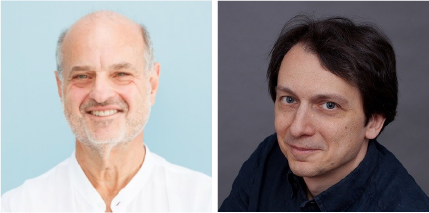
Congratulations, Drs. Salzman and Fusi!
Drs. C. Daniel Salzman and Stefano Fusi received a NIH/NIMH R01 for their proposal "Representational geometry reveals the neural and computational basis of neural circuit specialization in basolateral amygdala." |
|
|
|
|
|
|
HHMI Gilliam Fellowship for Graduate Students, open to international students.
Key eligibility: Second- and third-year PhD students, applying with their faculty advisor. US citizens, permanent residents, DACA recipients, and international students eligible. Deadline: October 27
Please reach out to us if you plan to apply. |
|
|
|
|
Weekly Office Hours
Every Thursday, 2:00-3:00 pm:
Meet the team and ask any questions during office hours.
Click here to join the Zoom meeting. |
|
|
|
|
Schedule time to meet with the team |
|
|
|
|
|
|
Congratulations to our recent award recipients!August 14 - September 18, 2026 |
|
|
|
|
Graduate Student Awards |
Helena (Lanie) Bachmann: NIH/NINDS 1F31NS151579-01 "Individual Differences in Dopamine-Dependent Learning and Decision-making in Parkinson's Disease" (Shohamy Lab)
Frankie Garcia: NIH/NIA 1F31AG099663-01A1 "Epigenetic Regulation of Microglial Identity and Function by ARID5B in Alzheimer's Disease" (De Jager Lab)
Kayla Pauers: NIH/NIA 1F31AG099704-01 "Control of synapse function by aging-related Pumilio 2 upregulation" (Hengst Lab) |
Postdoc Awards |
Mauro Miguel Monsalve Mercado: Simons (SCPAB) Fellows to Faculty award "Mechanistic Neural Geometry: Linking Biology to Cognition in the Aging Brain" (Miller Lab) |
Principal Investigator Awards |
Stefano Fusi & C. Daniel Salzman: NIH/NIMH 1R01MH141076-01A1 "Representational geometry reveals the neural and computational basis of neural circuit specialization in basolateral amygdala."
Nate Sawtell: United States-Israel Binational Science Foundation #2025352 "Circuit Mechanisms of Active Sensing in the Midbrain of Electric Fish" (with Dr. Avner at Technion). |
|
|
|
|
Upcoming funding opportunities |
|
|
|
|
Team Grants |
Want to write a large, multi-investigator grant? Come talk to us about planning and executing team grant applications. Schedule a meeting with our team here!
New/Highlighted Team Grant Opportunities
- BRAIN Initiative RM1: Integrative Team-Research BRAIN Circuits Program - iTeamBCP. Supports transdisciplinary research teams seeking to develop mechanistic, biologically grounded explanations of how neural circuits and their cellular building blocks give rise to central nervous system function. Applications must explicitly connect: (1) characterization of circuit components (e.g., cell types and/or connectivity); (2) measurement of dynamic circuit activity, incorporating in vivo CNS recordings at cellular and sub-second temporal resolution; and (3) analyses of a tractable behavior or functional output.. October 7 2026, June 23 2027, June 23 2028
- Forecasted: NINDS RM1: Collaborative Opportunities for Multiple-disciplinary, Bold, and Innovative Neuroscience (COMBINE). To pursue a single focused goal to overcome persistent barriers, challenge orthodoxies, achieve paradigm-shifts, or develop new foundational principles in neuroscience.
|
|
|
NIH's Highlighted Topics Relevant to ZI Investigators |
|
|
|
|
Established Investigators (view full list on our website) |
|
|
New/Highlighted Funding Opportunities
BRAIN Initiative R01: Theories, Models and Methods for Analysis of Complex Data from the Brain. For the development of computational tools (theories, models, methods) for understanding dynamic brain circuits, which will be made broadly accessible to the greater research community. October 6 2026; Resubmissions: November 6 Forecasted: BRAIN Initiative Brain-Behavior Quantification and Synchronization – Transformative Research on Behavior at the Organismal Level (BBQS). Forecasted: NIH Small Grant: Building Sustainable Software Tools for Open Science (R03). Forecasted: BRAIN Initiative Development and Validation of Novel Tools and New Approaches for Neuroscience Research. Anticipated deadline: June 10, 2027 Upcoming Funding Opportunities
- NIH Parent R01: New: October 5, February 5, June 5; Renewal/Resubmission: March 5, July 5, November 5
- NIH Parent R21: New: October 16, February 16, June 16; Renewal/Resubmission: March 16, July 16, November 16
- McKnight Neurobiology of Brain Disorders Award: Proposals that address the biological mechanisms of neurological and psychiatric disorders. This includes proposals that provide mechanistic insights into neurological functions at the synaptic, cellular, molecular, genetic or behavioral level across different species, including humans and vertebrate and invertebrate model organisms. A new additional area of interest is the contribution of the environment to brain disorders. October 15
|
|
|
Early Career Investigators (view full list and timeline on our website) |
|
|
Brain Research Foundation Seed Grant: Supports new and innovative projects, particularly those of junior faculty, who are working in new research directions in brain health and disease, including cancer. Limited submission: Internal Proposal Deadline – Monday, September 21, 2026 Katz Early Stage Investigator Research Project Grant (R01): Supports an innovative project that represents a change in research direction for an early stage investigator (ESI) and for which no preliminary data exist. September 28, January 26, May 26 McKnight Scholar Awards: To support exceptional young scientists who are in the early stages of establishing an independent laboratory and research career. Eligibility: must be an Assistant Professor within the first 5 years of starting an independent lab; can apply up to 2 times. November 3 2026. Klingenstein Fellowship Awards in Neuroscience: Supports early-career investigators within the first four years of completion of last postdoc. February 1 |
|
|
Post-Docs (view full list and timeline on our website) |
|
|
NSF Postdoctoral Research Fellowships in Biology (PRFB): Intersection of Artificial Intelligence and Biological Sciences to Strengthen and Safeguard Biotechnology Innovations. US citizen or permanent resident; Must not have worked in any position that requires a doctoral degree for a combined total of more than 15 full-time months prior to the deadline; limited to a maximum of two submissions, regardless of the outcome. September 29, 2026 Life Sciences Research Foundation Postdoctoral Research Award: Must have begun (or will begin) working in your proposed postdoc lab between August 1 of the previous year and July 31 of the upcoming year; Must apply within 5 years of receiving Ph.D. or M.D.; Post-doc must be in different lab than Ph.D. October 1 NIH K32 Academic Career Excellence (ACE) Award: U.S. citizen/permanent resident; 1st - 2nd year postdoc. October 12, February 12, June 12 NIH Parent K99/R00 Pathway to Independence Award: 1-2 years of postdoc + 3 years of faculty funding. nternational applicants eligible. 3rd - 4th year postdocs. New: October 12, February 12, June 12. Resubmission: March 12, July 12, November 12 NIH Parent K01 Mentored Scientist Development Award: U.S. Citizens/Permanent Residents; 2nd - 5+ year postdocs. New: October 12, February 12, June 12. Resubmission: March 12, July 12, November 12 NYAS Leon Levy Scholarships in Neuroscience: Must have no more than 2 years of postdoc experience (can request eligibility extension). October 16. NIH Parent F32 NRSA: U.S. citizen/permanent resident; 1st - 3rd year postdoc. December 8, April 8, August 8 HHMI Hanna H Gray Postdoc-to-Faculty transition award: No more than 7 years of postdoc experience; authorized to work in the US (international postdoc are eligible). Competition occurs every other year. December 15 *check with us regarding eligibility extensions for NIH grants |
|
|
|
Graduate Students (view full list and timeline on our website) |
|
|
NSF Graduate Research Fellowship Program (GRFP): Pre-grad, first or second year Ph.D.; U.S. citizen/permanent resident; Cannot have a master’s degree. Life Sciences deadline: October 16 Hertz Foundation Fellowship: Pre-grad or first year; U.S. citizen/permanent resident. Deadline: October 30 Paul & Daisy Soros Fellowships for New Americans: First or second year Ph.D.; Less than 31 years old; Must be an immigrant or child of immigrants; U.S. citizen/permanent resident, DACA, asylee, refugee. October 29, 2026 at 2:00 pm ET HHMI Gilliam Fellows Program: Second- and third-year PhD students; open to US citizens/permanent residents, DACA recipients, and international students. October 27 2026. NIH F31: For U.S. citizens/permanent residents. December 8, April 8, August 8. NIH F99/K00: Pre-doc to post-doc transition award: For grad students with 1.5-2 years left of PhD at award start (typically 3rd or 4th year students). Must be a U.S. citizen/permanent resident. December 8, April 8, August 8. |
|
|
|
The Future in Mind
The Zuckerman Institute Friday Funding monthly email recaps the latest award wins of our researchers and outlines important upcoming grant deadlines.
|
|
|
|
|
|
|